
Travel readiness
Roadside Emergency Readiness in Dubai: Stay Safe
On a roadside, helping starts with not becoming another casualty. This article is a preparation checklist, not instructions for traffic control, vehicle extraction or medical rescue. The right response depends on the scene; emergency services should direct actions when there is injury, danger or uncertainty.
General information for adults. Not a substitute for medical assessment.
Know which emergency service you need
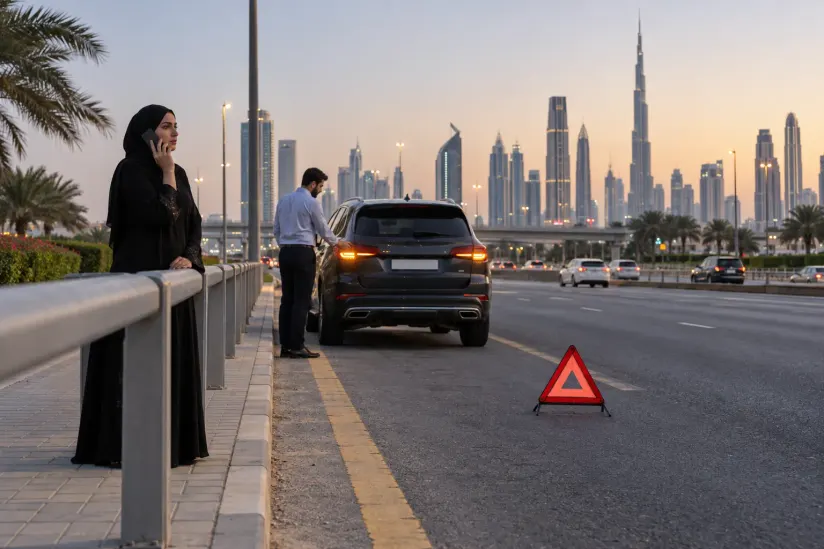
The UAE lists 999 for police, 998 for ambulance and 997 for fire. In a collision or dangerous road situation, communicate the immediate risk and follow instructions from the relevant emergency service. Routine clinic or website numbers are not substitutes. Save the numbers somewhere all adult passengers can access rather than relying on one person’s phone being available.
Prepare useful road location details
If it is safe to do so, describe the road name, direction of travel, nearby exit or landmark and where the vehicle is positioned. Check your map before the journey so you recognise unfamiliar routes. Do not step into traffic to read a sign or take a photo. If you cannot identify the location precisely, explain what you can see and let the operator guide you.
Do not turn preparation into improvised rescue
Traffic, fire, smoke, fuel and damaged vehicles can create danger. Do not enter an unsafe scene or attempt vehicle extraction because you have read a guide. Tell the operator about hazards and whether anyone appears trapped. Follow emergency instructions and only assist within your training when the scene is safe. Protecting bystanders is part of helping, not a lack of concern.
Plan for passengers who need support
Before travel, discuss accessible communication and essential medicines with the person concerned. Keep relevant emergency contact information reachable and private. An older passenger, a person with limited mobility or a child may need a different practical plan. Do not store medicines in unsuitable heat or treat a general first-aid kit as a substitute for a condition-specific plan agreed with their clinician.
Give a concise handover and then follow directions
Share the incident, number of people affected, visible concerns and any instructions already followed. Avoid speculating about injuries or photographing people for a website enquiry. If symptoms or scene conditions change, tell the operator. After the event, replace used supplies and review your readiness plan; professional assessment decides whether someone needs further care.
Common questions
Should I move an injured passenger?
Do not improvise moving someone who may be injured. Describe the situation to emergency services and follow their directions.
Can the website send roadside responders?
No. It is an information guide; use the appropriate UAE emergency service.
Do I need a kit before calling for help?
No. Lack of supplies must not delay an emergency call.
Sources and information limits
Sources support general medical principles, not the UAE booking policies or service availability. Confirm instructions and local arrangements with the care provider. The update date does not claim clinician review.
Content policy and review statusQuestions before arranging an appointment?
Enquire about the next steps and availability. An enquiry does not confirm a booking or diagnosis and is not an emergency service.