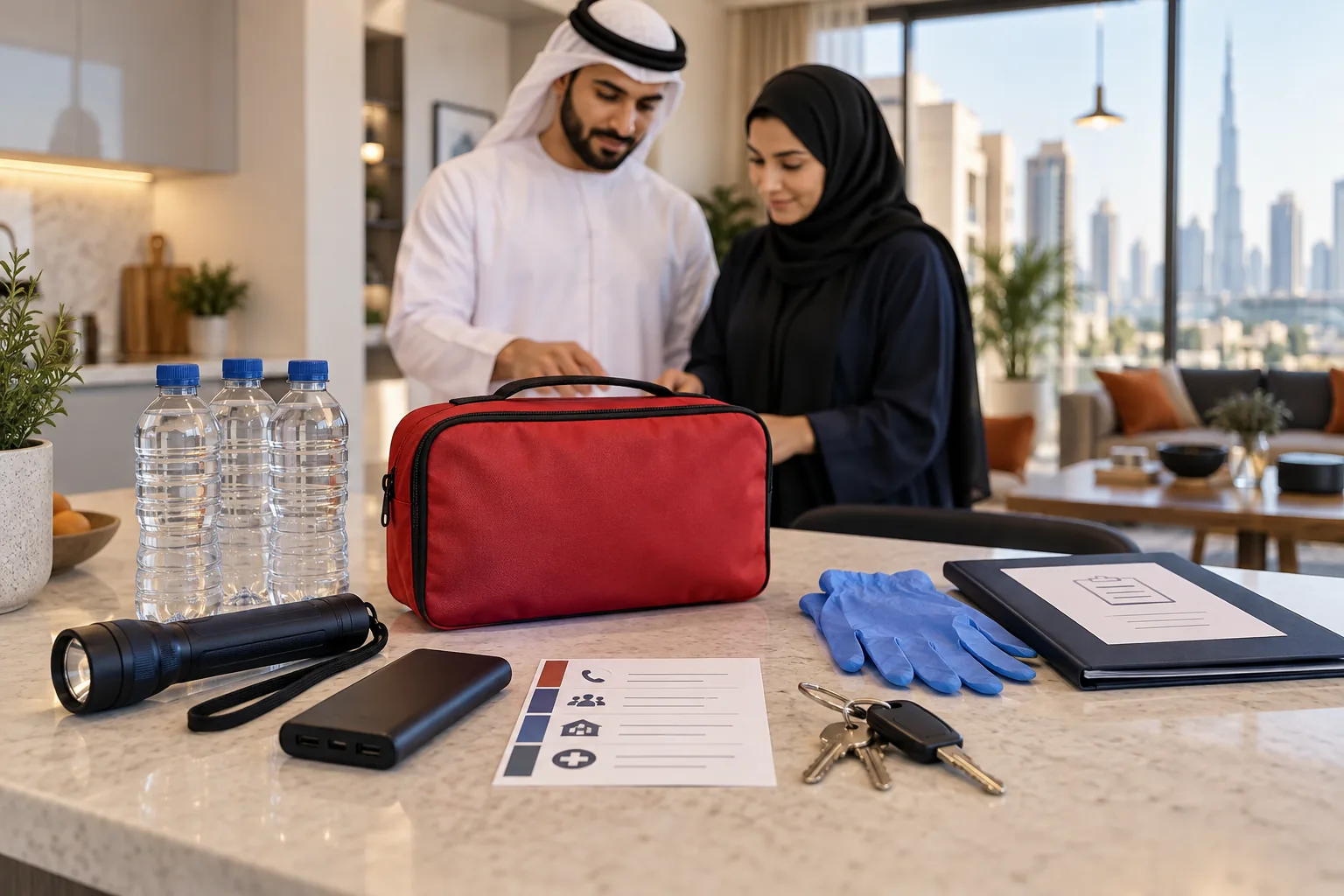
Write down access details
Record the full address, building name, unit, community, closest landmark and access instructions in English and Arabic if possible.
Know how to unlock the main entrance, provide lift access and direct responders from the street.
Keep a charged phone and power bank available; enable location services for emergency calling where appropriate.
Keep essential information current
Maintain a concise list of allergies, regular medicines, diagnoses, emergency contacts and identification details for each household member.
Store it where adults can find it quickly while still protecting privacy.
Review the list after any medication or health change and tell visitors or caregivers where it is.
Maintain—not decorate—the kit
Choose a practical first-aid kit and learn how to use its contents through an accredited course.
Replace expired or used items and add gloves, dressings, a flashlight and supplies relevant to the household.
Do not stock prescription medicines for others or treat the kit as a substitute for calling 998.
Make one emergency information card
Keep a short card with the full address, building entrance, floor, access instructions, household contact and the emergency numbers 998, 999 and 997. A visitor or caregiver should be able to use it without guessing.
For each person who wants this recorded, keep an up-to-date medication and allergy list in a place adults can find. Protect the information from unnecessary access; do not put sensitive medical details on a public notice board.
If someone has mobility, hearing, visual or communication needs, add a simple note about how responders can reach and communicate with them. Do not assume every household member can use the same exit or phone.
Rehearse the first minute
Ask household members to practise saying the address and describing the nearest safe entrance. Decide who will call, who will meet responders and who will stay with the person needing help.
Walk through the route to the building entrance and check that keys, access cards and lifts can be used when needed. Keep corridors and exits clear rather than storing emergency supplies where they block escape.
Review the plan when people move, medicines change or a new caregiver joins. A short plan that can be followed is more valuable than a long document nobody can find during an emergency.